Design leader & practitioner across consumer and enterprise products, specialising in systems, AI experiences, and simplifying complex journeys into clear, human-centered solutions.
+971 55 204 7448
majd.nasser@gmail.com
↗
Case studies - Coursera Design System Leader & Practitioner
↗
Case studies - SSO & Account linking Leader
↗
Case studies - Coach “AI tutor” / AI PlatformLeader & Practitioner
↗
Case studies - Farfetch
Practitioner
↗
FY-26 Initiative Planning Framework
Leader
↗
The Challenge: From Idea Surplus to Conviction Deficit
For FY-26 planning, the Workforce Learning vertical faced a high-stakes bottleneck. We had multiple multidisciplinary pods and no shortage of ideas. What we lacked was shared conviction.
Teams had exactly two weeks to transform dense business requirements into 2–4 high-confidence initiatives. The "villain" was the gravitational pull of individual opinions and the trap of jumping to solutions before defining the problem. We needed a way to move from "I think" to "We know."
My Role: The Architect of Alignment
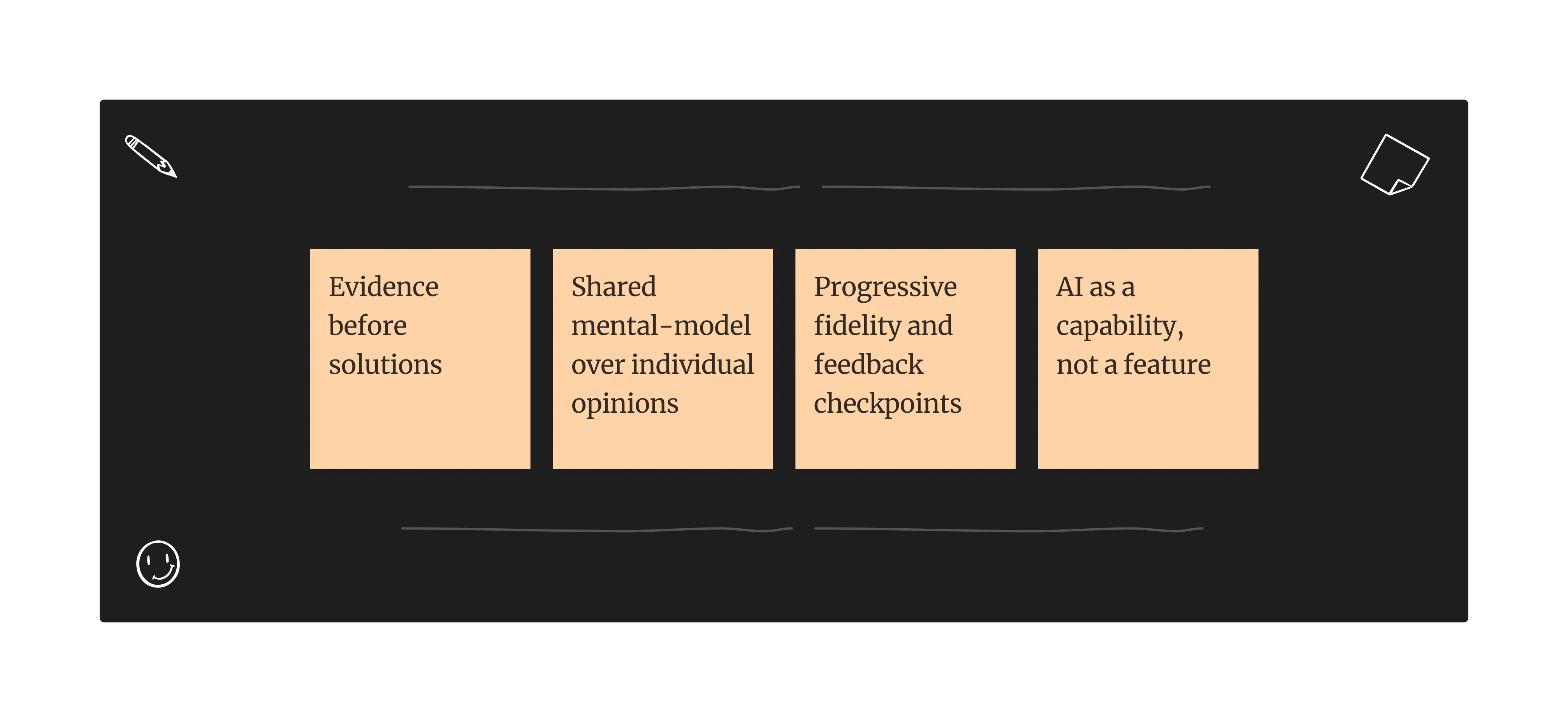
As the Design Leader, I designed the operating system for the planning cycle. I established four core Design Principles to guide the work:
- Evidence before solutions: Grounding every move in data.
- Shared mental-model over individual opinions: Creating a common language.
- Progressive fidelity and feedback checkpoints: Ensuring effort matched confidence.
- AI as a capability, not a feature: Treating AI as a fundamental layer of the experience.
Design Principles Behind the Framework
Phase 1: The War on Assumptions
Goal: Move from Business Requirements to a "Problem Worth Solving."
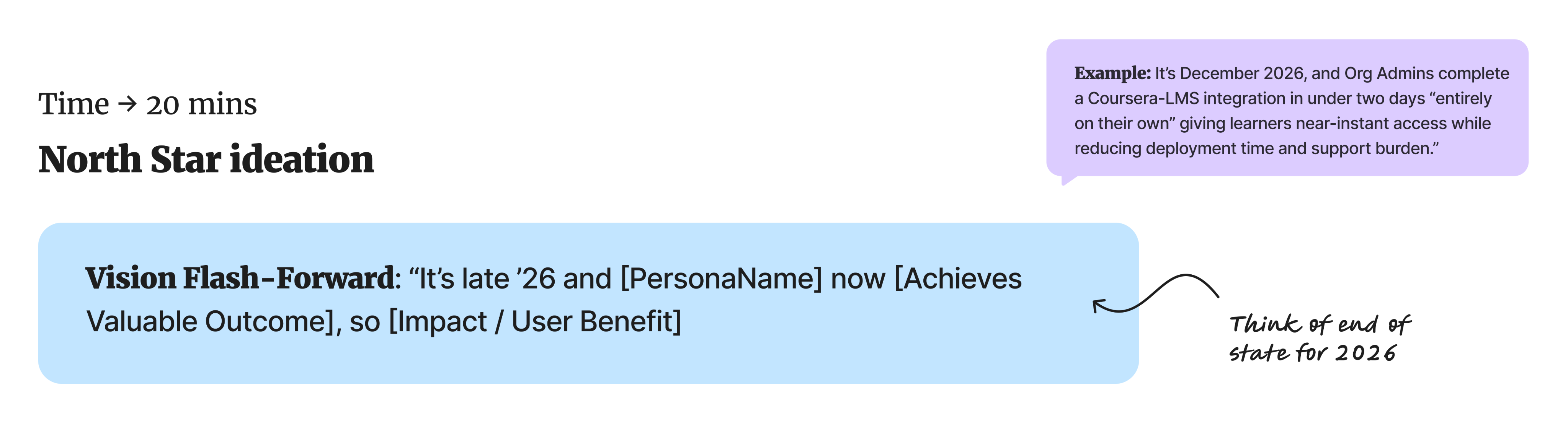
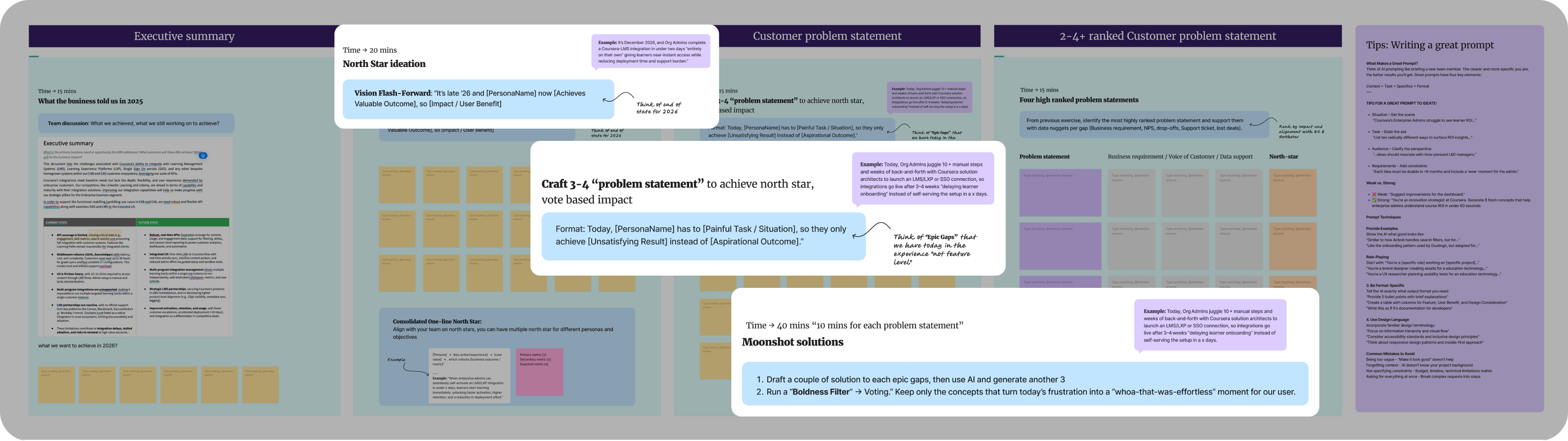
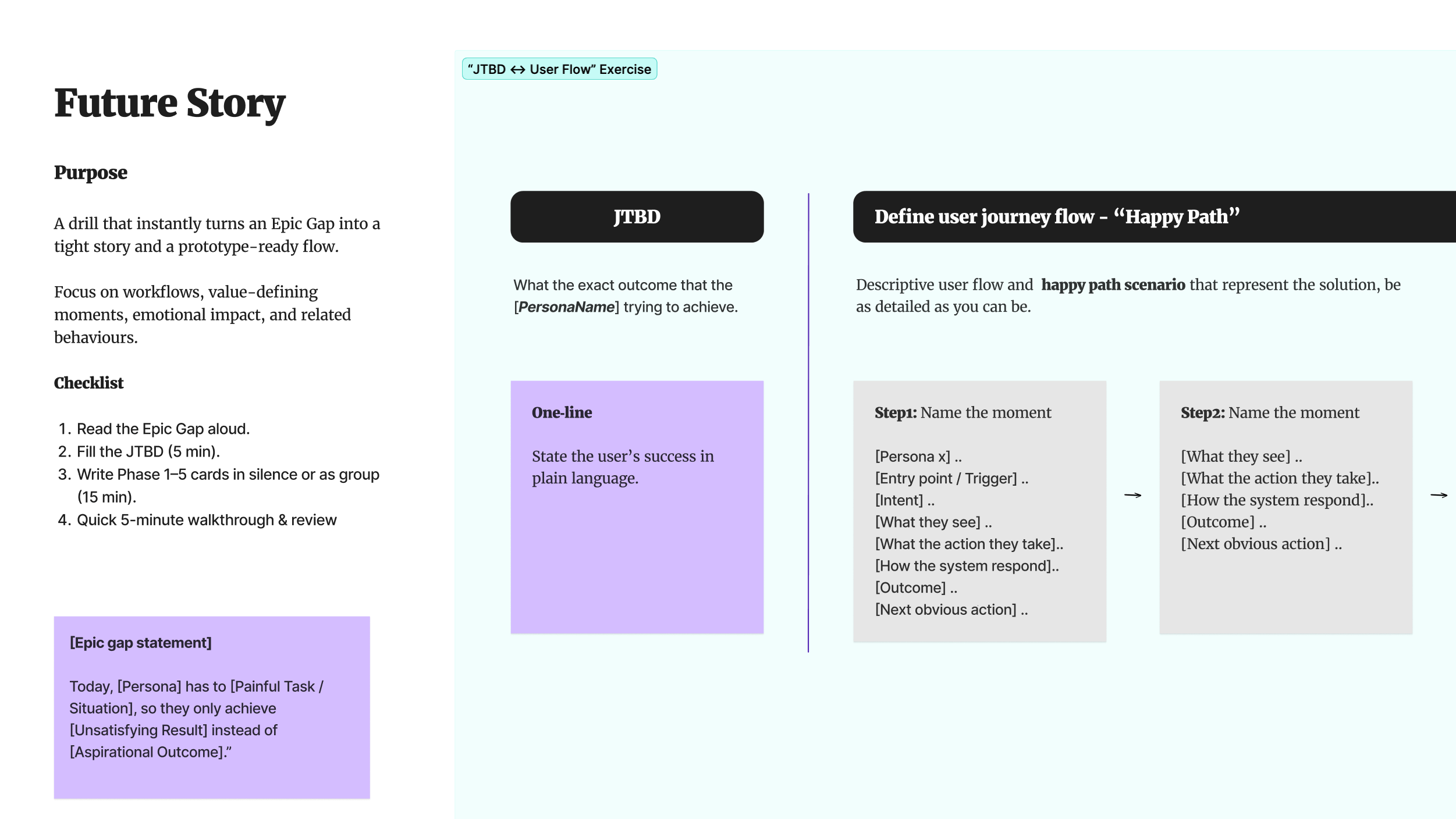
- The Vision Flash-Forward: To anchor the teams, I introduced a "Vision Flash-Forward" exercise. Teams had to complete the statement: "It’s late ’26 and [PersonaName] now [Achieves Valuable Outcome], so [Impact / User Benefit]". This forced teams to think about the end-state of 2026 before debating features.
- AI as the "Devil’s Advocate": We used AI as a thinking partner to challenge our blind spots. During ideation, AI helped us widen the solution space and find logical flaws in our problem statements.
- Problem statements are then written and refined until they are clear, comparable, and defensible. At this point, ideation is intentionally delayed until the problem space is solid.
- AI as the "Devil’s Advocate": We used AI as a thinking partner to challenge our blind spots. During ideation, AI helped us widen the solution space and find logical flaws in our problem statements.
Phase 2: Making the Future TangibleGoal: Visualizing the Future State without Over-Investing.
Once the problem was solid, the risk shifted to feasibility. How do we prove an AI-driven future works without building it?
- The "Future Story" Drill: I designed a drill to instantly turn an "Epic Gap" into a prototype-ready flow. Teams filled out Job-to-be-Done (JTBD) cards and defined a "Happy Path" user journey, naming each moment of the interaction.
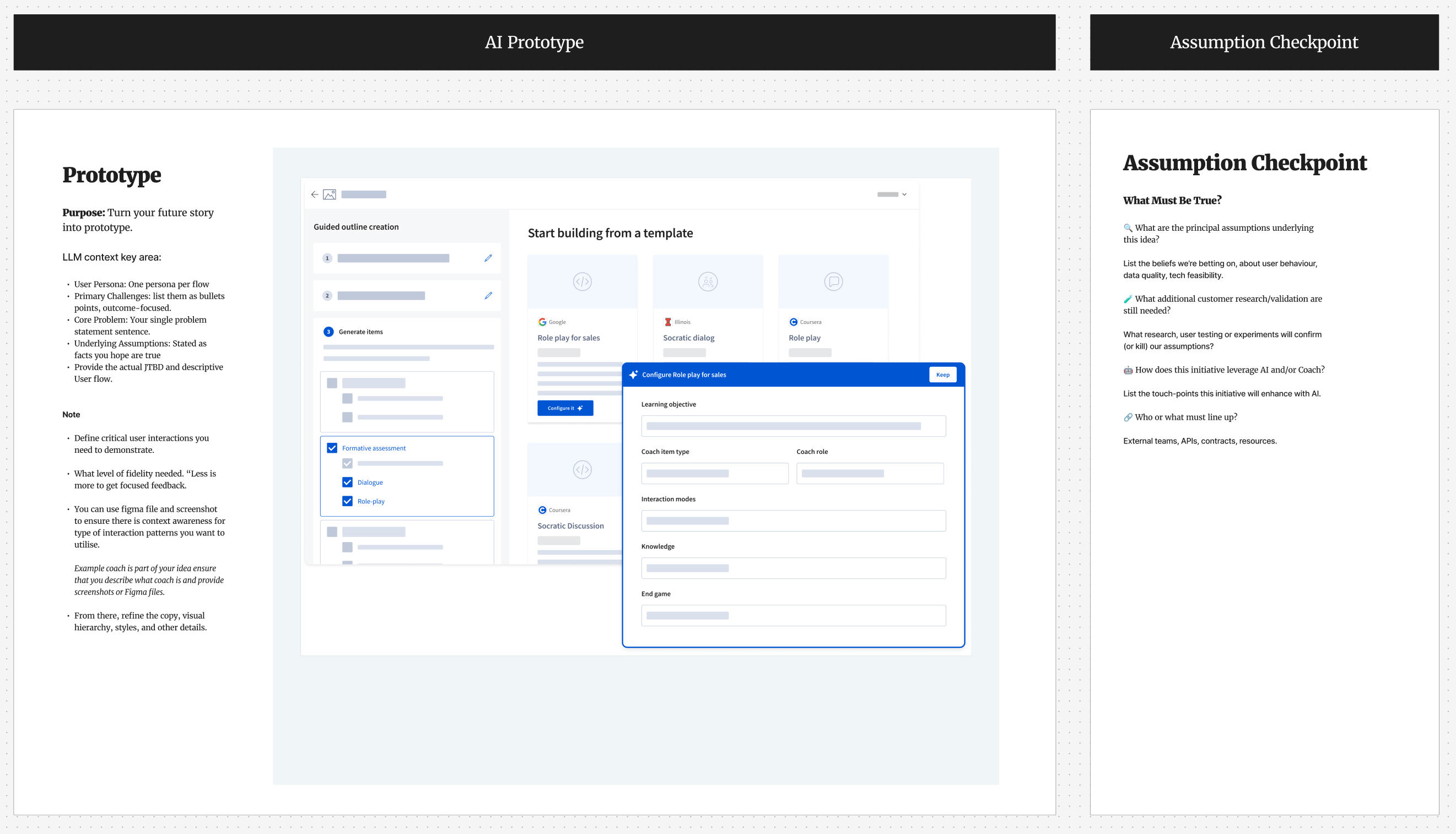
- Prototyping with Purpose: We utilized a structured approach to turn stories into interactive prototypes. I encouraged teams to define critical user interactions and use "less is more" to get focused feedback.
- The Assumption Checkpoint: Before moving to funding, we made the invisible visible. Teams had to document "What Must Be True?" across user behavior, data quality, and tech feasibility.
- Prototyping with Purpose: We utilized a structured approach to turn stories into interactive prototypes. I encouraged teams to define critical user interactions and use "less is more" to get focused feedback.
- The Assumption Checkpoint: Before moving to funding, we made the invisible visible. Teams had to document "What Must Be True?" across user behavior, data quality, and tech feasibility.
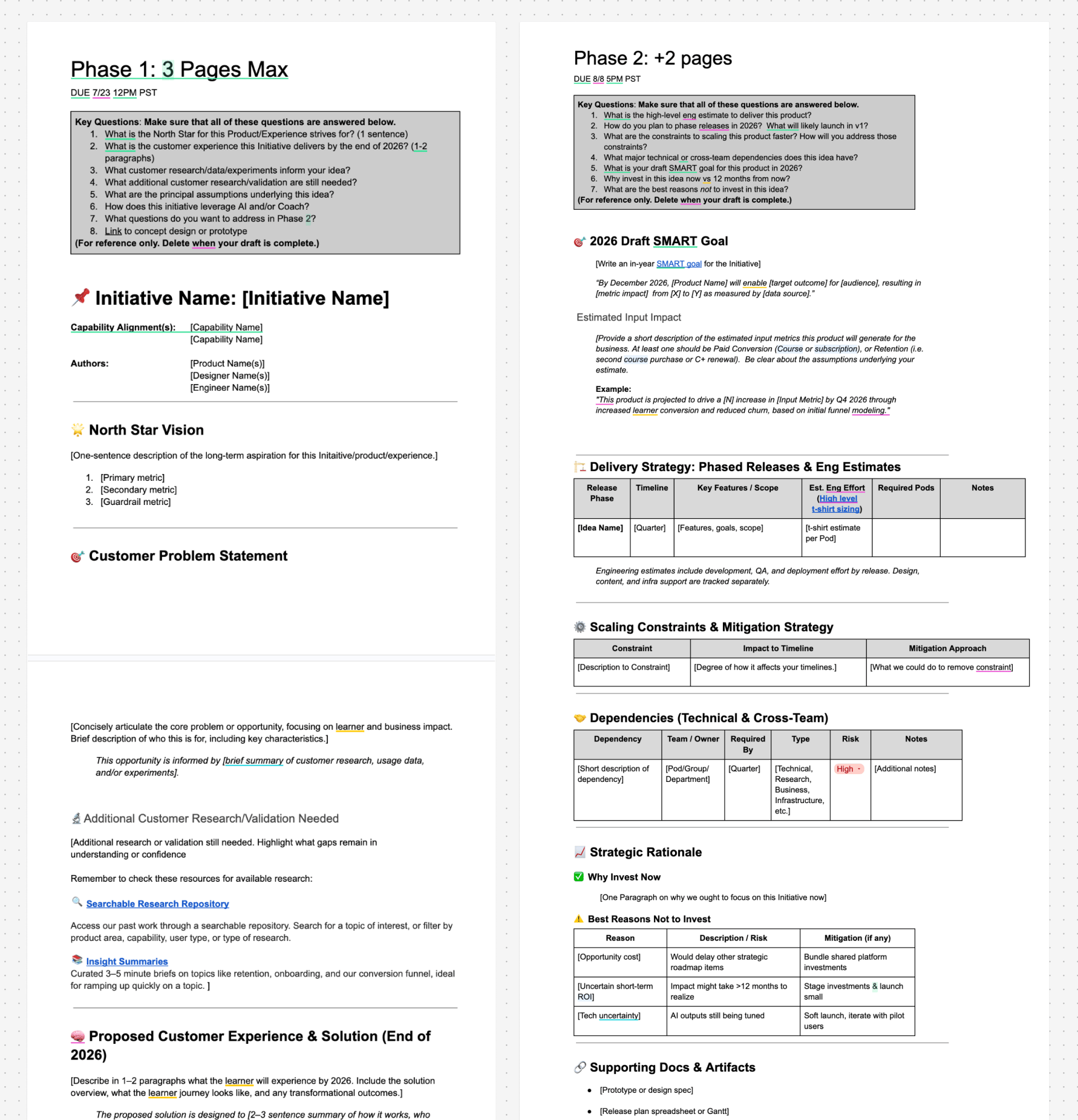
The Result: A Foundation of TrustThe work from all stages was consolidated into a structured Planning Document. This 3-to-5-page brief answered critical questions for leadership:
- What is the North Star?
- What is the customer experience?
- How does this leverage AI?
- What are the engineering estimates and delivery strategies?
The Outcome: Leadership received a portfolio of epics backed by prototypes they could actually see and react to. Because the "thinking" was visible through our Assumption Checkpoints and SMART goals, the review process shifted from a negotiation to a strategy session.